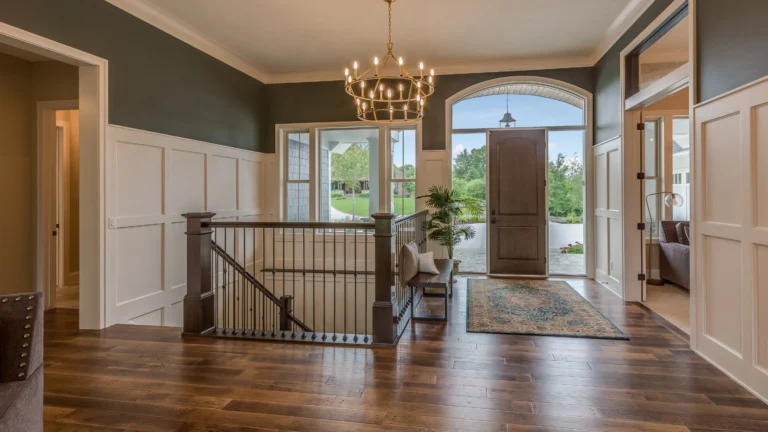
If you’re planning a hardwood upgrade in St. George, you’ve probably heard the same advice over and over: “Solid hardwood is the gold standard.”
Here’s the reality homeowners often don’t hear upfront:
In Southern Utah’s dry desert climate, solid wood isn’t always the better choice.
Choosing the right hardwood isn’t about tradition or price, it’s about how the floor will behave after it’s installed. Let’s walk through how engineered and solid hardwood actually perform in St. George homes, and why engineered hardwood often ends up being the more reliable option.
Why Climate Matters More Than Most People Realize
Wood is a natural material. It expands and contracts as humidity changes.
In St. George, homes deal with:
- Extremely dry air for much of the year
- Big seasonal swings between winter heating and summer cooling
- Slab foundations that can introduce moisture imbalance
When wood moves too much, or in the wrong direction you see problems like:
- Gapping between boards
- Cupping or crowning
- Cracks, splits, or joint failure
The question isn’t if wood will move. It’s how much movement the floor can tolerate without failing.
Solid Hardwood: Beautiful, but Less Forgiving
Solid hardwood is exactly what it sounds like: a single, solid piece of wood from top to bottom.
Where solid hardwood can struggle in Southern Utah
- More sensitive to humidity changes – solid planks expand and contract more aggressively
- Higher risk of gapping in dry conditions
- Limited install locations – not ideal over concrete slabs
- Less margin for error if prep or moisture control isn’t perfect
That doesn’t mean solid hardwood is “bad.” It means it requires:
- Very stable indoor humidity
- Careful acclimation
- Tight installation tolerances
- Ongoing climate control
For many planning-oriented homeowners, that’s more risk and maintenance than they want to take on.
Engineered Hardwood: Built for Stability
Engineered hardwood is made of a real hardwood surface bonded to multiple layers of plywood or composite core beneath it.
This layered construction isn’t a shortcut, it’s intentional.
Why engineered hardwood performs better in dry climates
- Greater dimensional stability – the layered core resists expansion and contraction
- Handles humidity swings better – less seasonal movement
- Works well over concrete slabs (with proper prep)
- Wider plank options without increased failure risk
In practice, engineered hardwood often delivers the same visual impact as solid wood, with fewer long term issues, especially in desert environments like St. George.
The Install Matters More Than the Material
Here’s the part most flooring conversations skip:
Even the right product can fail if it’s installed incorrectly.
Before any hardwood goes down, we look at:
- Subfloor flatness and condition
- Moisture levels in the slab or substrate
- Room specific use (kitchens, hallways, stairs)
- Seasonal movement expectations
This is where many failures start, not because the product was wrong, but because prep and expectations weren’t clearly documented upfront.
Our approach is to show you:
- What we’re checking
- Why it matters
- How it affects which hardwood option is safest for your home
That clarity is what helps homeowners avoid expensive redo scenarios later.
So… Which One Is Right for Your Home?
For most St. George homes:
- Engineered hardwood is the safer, more predictable choice
- It offers real wood beauty with better long term performance
- It reduces the risk of climate related issues
Solid hardwood can still make sense in specific situations, but only when the environment, structure, and expectations are a good match.
The key is not choosing what sounds premium. It’s choosing what will last. We can walk you through it and help you compare your options with a guided design consultation. We will help you to learn all about flooring because when you can see the differences clearly, the right choice usually becomes obvious.
Frequently Asked Questions
Is solid hardwood always the best choice for homes in St. George?
Not always. While solid hardwood is often seen as the premium option, it is not always the most practical choice in St. George’s dry desert climate. Engineered hardwood is often the more reliable option because it handles climate-related movement better.
Why does St. George’s climate affect hardwood flooring so much?
Wood naturally expands and contracts as humidity changes. In St. George, extremely dry air, seasonal temperature shifts, and slab foundations can all create movement in the flooring, which may lead to gapping, cupping, cracking, or other long-term issues.
What are the main advantages of engineered hardwood in a dry climate?
Engineered hardwood is designed with a layered core that improves stability. This helps it resist expansion and contraction, handle humidity swings more effectively, and perform better over concrete slabs, making it a strong choice for many St. George homes.
Can solid hardwood still work in Southern Utah homes?
Yes, but it usually works best only in the right conditions. Solid hardwood requires stable indoor humidity, careful acclimation, precise installation, and ongoing climate control to reduce the risk of movement and damage.
Does installation matter as much as the hardwood material itself?
Yes. Even a high-quality hardwood product can fail if the installation is not done properly. Checking subfloor condition, moisture levels, room use, and seasonal movement expectations is essential to choosing the right product and helping the floor perform well over time.